What makes an auction car a good buy?
A good auction purchase is a car whose condition, likely costs and intended use you understand. A low bid can become an expensive project if the vehicle needs major repairs or specialist loading. Start with the car you need, research the model and decide what work you are prepared to take on.
Read the auction’s buyer eligibility rules, terms and available vehicle information. Registration requirements and access to sales can differ. Check directly with Copart, BCA, IAA or SYNETIQ before relying on an account or arranging a viewing. Where inspection or a virtual viewing is available, use it to investigate concerns before bidding.
Check the history, MOT and actual condition.
Ask for the registration and vehicle identity details, then compare the listing with the available documents. GOV.UK’s used-vehicle checks explain how to check DVLA information, the log book, vehicle identity and safety recalls. Note which documents are actually supplied with the lot.
Use the official MOT history service to review recorded mileage, passes, failures and advisories. Look for unresolved faults and patterns that need investigation. An old MOT result does not describe today’s mechanical condition, and a vehicle-history report is not a substitute for an inspection.
Read the full condition report, all photos and the additional-information notes. Check for missing keys, damaged wheels, poor ground clearance and evidence of significant repairs. Consider an independent inspection and a history check covering finance and recorded loss information. For an unfamiliar fault or damaged electric vehicle, seek an appropriate specialist’s assessment.
Further reading: Copart’s pre-auction checks.
Know what damage categories and running labels mean.
Category S relates to structural damage; Category N relates to non-structural damage. Neither label is a repair estimate or a promise that the vehicle is safe to drive. Category N should not be treated as meaning “only cosmetic”. Get the repair requirements assessed before deciding whether a salvage purchase suits you.
Copart’s “Run and Drive” label describes checks made when a vehicle arrived at its location. It does not guarantee roadworthiness or that the vehicle will start or move when collected. Read Copart’s explanation of vehicle icons before treating a listing as a transport plan.
If a car does not run, we need to know whether it rolls, steers, goes into neutral and releases the handbrake. Mention locked wheels, missing wheels, suspension damage or a low body kit. These details affect the recovery equipment and whether the proposed collection is suitable.
Category definitions: Copart vehicle types and grading.
Budget beyond the winning bid.
Work out the full cost before setting your bidding limit. Depending on the sale and your circumstances, that can include buyer and bidding fees, applicable VAT, payment charges, collection, repairs, replacement keys and any storage or late-payment costs. Leave room for work that a listing cannot fully reveal.
Winning bid + applicable auction fees and tax + collection and delivery + assessed repair and preparation costs.
Check the auction’s current fee schedule, payment deadlines and collection deadlines directly. They can change and may depend on the purchase. Copart’s buying-fee guidance explains why the total can be higher than the bid. Request a recovery estimate early, then have the final quote confirmed against the actual job.
Arrange release and auction collection.
Once the purchase is confirmed, check when the auction will release the vehicle and what the collector needs. Payment clearance, permissions, release references and collection appointments should be sorted before a truck is sent. Check the branch’s own instructions rather than assuming every auction works the same way.
Send us the branch, vehicle details, collection and delivery postcodes and preferred date. We check availability and the collection arrangements with you. Tell us about the deadline when requesting the quote; an early enquiry gives more room to plan, but a particular slot or collection date is only agreed when confirmed.
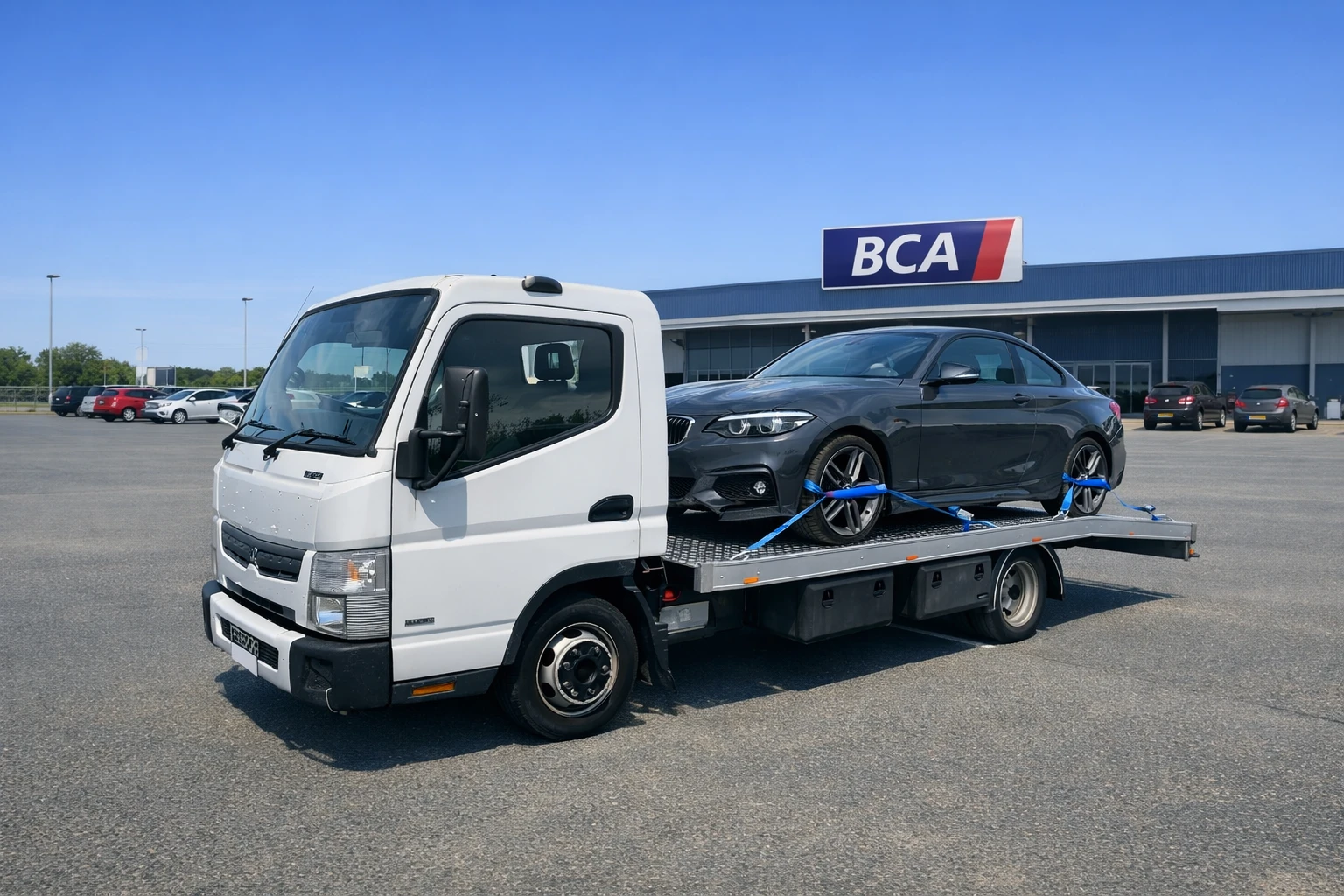
Use our Copart collection, BCA car transport and IAA and SYNETIQ recovery pages for the relevant service details.
Give the transport team the information that matters.
Safe vehicle collection starts with an accurate description. Share current photos of damage, wheel position, ground clearance and access where available. A vehicle with locked wheels or steering damage needs a different approach from a running car. The loading plan and equipment must suit the condition and the available space.
Agree a practical delivery point at your home, garage, bodyshop or business. Tell us about narrow roads, low entrances, steep drives, opening times and who will receive the vehicle. If it needs repairs, consider delivery straight to the workshop so the next stage is already arranged.
Do not assume an auction description makes a car ready for a public road journey. Roadworthiness, insurance, tax, MOT requirements and the auction’s own exit rules need checking before anyone plans to drive it. Recovery transport can move a vehicle to its destination while inspection and repair arrangements are made.
Plan safe vehicle collectionBefore bidding. Before collection.
- Read the lot information, buyer terms and available inspection reports.
- Check vehicle identity, MOT history, documents and damage details.
- Allow for fees, applicable tax, repairs and transport in the total cost.
- Confirm payment, release permission and any collection appointment.
- Tell us about keys, neutral, handbrake, steering and wheel condition.
- Agree the collection price, availability, destination and delivery access.
Before you arrange collection.
Does Run and Drive mean I can drive an auction car home?+
No. Copart describes the vehicle’s ability to start, engage a gear and move when it arrived. It does not guarantee roadworthiness or that it will run at collection. Confirm the auction’s collection rules and arrange suitable transport.
Can you collect an auction car that does not start?+
We can plan non-runner collection after checking the vehicle and access. Tell us about keys, steering, neutral, handbrake release, rolling condition and wheel damage so the loading method can be assessed.
Should I get a transport quote before bidding?+
Yes. Include collection and delivery in your total budget. An early estimate helps you plan, and we confirm the booking price and availability once the vehicle condition, branch, release requirements and destination are known.
What do I need to arrange auction vehicle collection?+
Send the auction branch, vehicle make and model, collection and delivery postcodes, vehicle condition and preferred date. Release references, permissions and any collection-slot requirements are checked before the job is arranged.
Ready for the next step?
Send the auction branch, vehicle condition and destination. We’ll confirm a collection quote and availability.